Overview
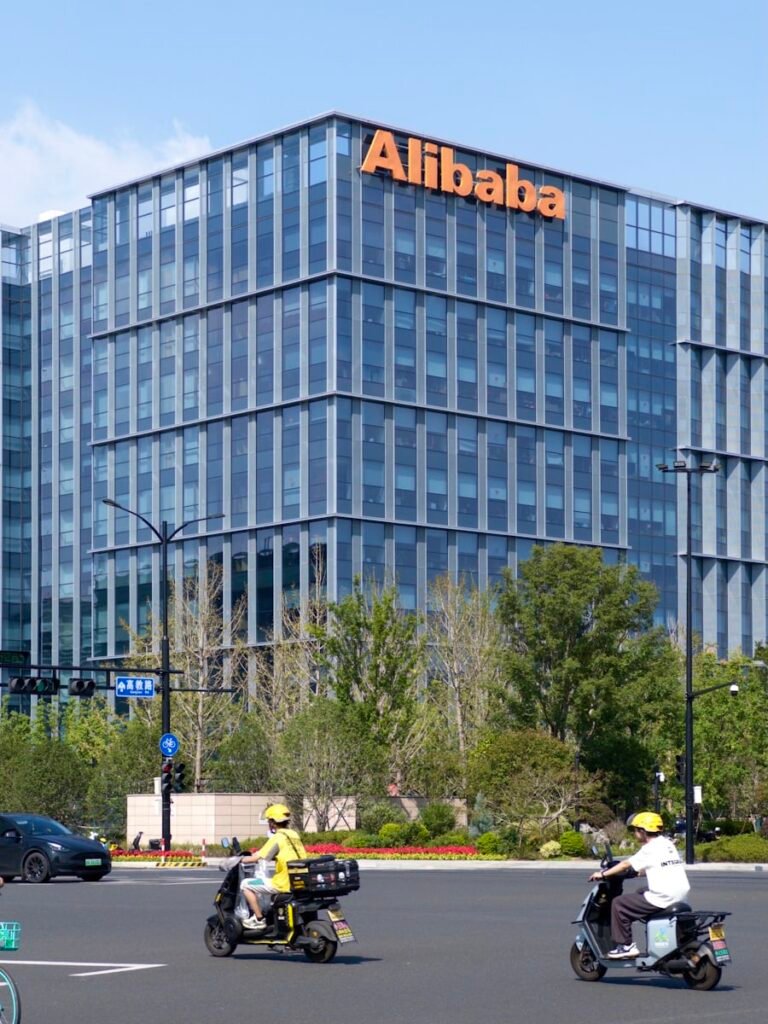
Alibaba is preparing to introduce revenue-sharing terms for certain commercial users of its next Qwen open-weight AI model, according to Reuters citing two people familiar with the company’s plans. The arrangement would require larger companies that generate revenue from offering the model as a service to reach a commercial agreement with Alibaba, with the exact revenue-sharing rate still not finalised.
This marks a shift for Alibaba, which has previously charged developers for access to models hosted through its cloud platform while generally allowing customers to deploy its open-source models in their own data centres without paying licensing fees. The proposed arrangement would differ from the licensing used for the current Qwen3 open-weight models, released under the permissive Apache 2.0 licence.
Open-Source versus Open-Weight
Open-weight models make their trained parameters available for download, but that does not necessarily mean every part of the AI system is open or that all forms of commercial use are unrestricted. The Open Source Initiative’s Open Source AI Definition requires that an open-source AI system allow users to use, study, modify, and share it for any purpose without seeking permission, and also requires access to information about training data, relevant code, and model parameters.
Alibaba and other Chinese AI developers have released large models with downloadable weights, while OpenAI, Anthropic, and Google primarily distribute their main commercial models through closed systems and hosted services.
The Moonshot Precedent: Kimi K3 Licensing
Alibaba’s planned terms resemble the licensing model adopted by Chinese AI developer Moonshot for Kimi K3, an open-weight model released last month. Kimi K3’s published licence includes separate conditions for companies operating Model-as-a-Service businesses above certain revenue thresholds.
Under Kimi K3’s licence, a company operating such a service must reach a separate agreement with Moonshot when the combined revenue of the company and its affiliates exceeds $20 million during any consecutive 12-month period. The provision applies to commercial use of Kimi K3 and derivative models.
The licence also contains a requirement for large consumer-facing deployments: commercial products exceeding either 100 million monthly active users or $20 million in monthly revenue must prominently display the Kimi K3 name, with exemptions covering internal use and services offered through Moonshot or certified inference partners.
According to two people familiar with Moonshot’s commercial arrangements, those agreements can include revenue sharing. One source said Moonshot can require partners to share up to 30% of the revenue involved. Chinese IT services company Chinasoft International disclosed a revenue-sharing agreement with Moonshot in a regulatory filing last month, though it did not disclose the percentage involved. DigitalOcean Holdings is also among the companies offering Kimi K3 and other Chinese models.
Industry Perspectives on the ‘Freemium’ Open-Source Model
DigitalOcean Chief Executive Paddy Srinivasan confirmed that DigitalOcean has a commercial agreement with Moonshot but declined to provide details. He described the approach as an open-source “freemium” model, where companies can access software at little or no initial cost before paying for larger-scale commercial use, technical services, or earlier access to future releases.
Dan Fu, vice president of kernels at Together AI, noted that companies providing AI services can differentiate their offerings through areas such as more efficient token use and deployment optimisation.
“At the application layer, there’s value out there for how you use it, how you actually get the models and the tokens to do something useful,” Fu said.
The Cost of Running Open Models at Scale
Companies can download an open-weight model without paying for access to an API, but large models still require substantial computing infrastructure when deployed at scale. Kimi K3 contains 2.8 trillion total parameters and 104 billion activated parameters, according to Moonshot. Its mixture-of-experts architecture includes 896 experts, with 16 selected for each token.
The model’s size places substantial hardware requirements on operators. Moonshot temporarily stopped accepting new Kimi K3 subscriptions in July after saying usage had placed pressure on its available GPUs, while Reuters reported that relatively few users were expected to self-host a model of that scale because of the infrastructure required.
Alibaba is using a similar architectural approach with Qwen3.8-Max. The model contains about 2.4 trillion parameters but activates around 95 billion parameters for each request, according to Reuters. Moonshot says its mixture-of-experts design improves scaling efficiency by activating only a subset of the model’s experts for each token, rather than the full model.
Cloud providers can charge for hosting and inference, while AI infrastructure companies can generate revenue from deployment and optimisation services. Model development presents a separate cost challenge. Research involving Epoch AI and Stanford researchers estimated that the cost of the most compute-intensive training runs had risen by about 2.4 times a year since 2016, while Stanford’s 2025 AI Index found that the price of accessing models at a given capability level had fallen sharply.
At published API prices at the time of release, Kimi K3 was priced at about one-third of Anthropic’s Fable model based on listed input and output token rates. Pricing is only one part of the deployment cost, particularly for companies running models on dedicated infrastructure or handling high volumes of requests.
Geopolitical and Industry Context
The commercial arrangements are developing alongside wider tensions between China and the US over AI technology. The White House has accused Moonshot of using technology taken from Anthropic while developing its models, an allegation Chinese officials have rejected.
Interest in releasing models with downloadable weights is not limited to Chinese developers. Thinking Machines Lab, the San Francisco AI company founded by former OpenAI Chief Technology Officer Mira Murati, released its first open-source model last month. Lin Qiao, chief executive and co-founder of Fireworks AI, said there was no fundamental technical barrier preventing US developers from releasing more capable open-source models. Fireworks AI works with models from developers including Moonshot, although Qiao declined to discuss its commercial arrangements.
Conclusion
Alibaba has not publicly announced the final licence for its next Qwen model or the revenue-sharing percentage it plans to seek from large commercial users. The move reflects a broader trend among open-weight model developers to explore sustainable revenue models as the cost of running and developing large AI models continues to rise. By mirroring Moonshot’s Kimi K3 licensing approach, Alibaba could reshape how open-weight AI models are commercialised, while still keeping model weights downloadable for the broader developer community.